Best AI Tools for Studying in 2026 (Tested by Students)
"Struggling to keep up with lectures, notes, and exams? We tested the top AI study apps so you don't have to. Here's what actually works."
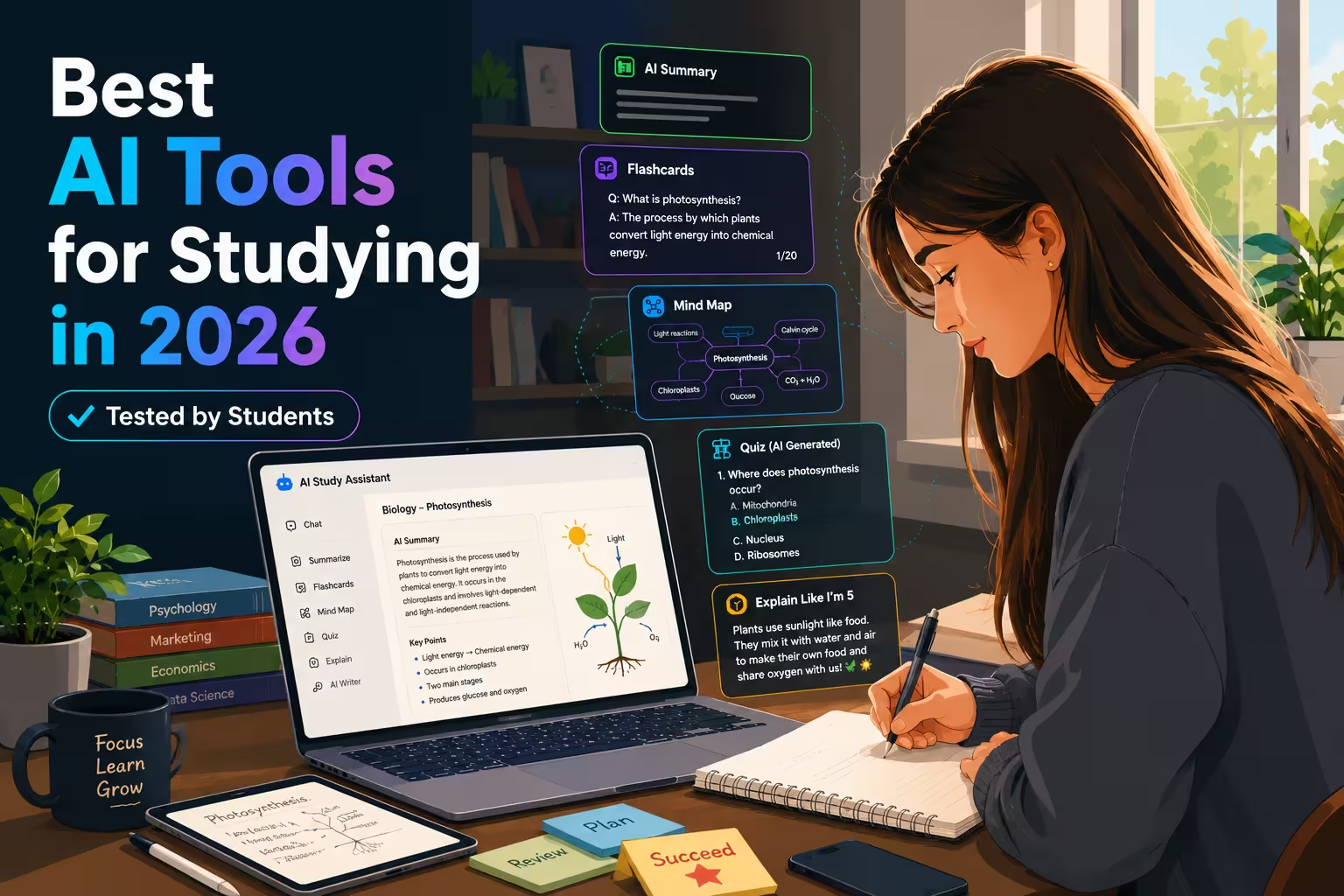
It was 11:47 PM. My anatomy final was in nine hours. I had 400 pages of notes, three lecture recordings I hadn't watched, and the very specific feeling that I was absolutely cooked.
That night, out of desperation more than strategy, I opened a handful of AI study apps and just... started uploading things. What happened next genuinely surprised me. Within twenty minutes, I had flashcards, a practice quiz, and an audio summary I could listen to while pacing around my apartment at midnight. I passed that exam.
That experience sent me down a rabbit hole. I spent weeks properly testing every major AI study tool available in 2026, not just clicking around but actually using them on real course material, under real exam pressure. This is what I found.
TL;DR: Key Takeaways
- •Thea is the best all-in-one free app with adaptive learning games, and it has the most generous free tier of anything we tested.
- •NotesXP is the most complete AI study toolkit on the market. Everything a student needs in one app, with AI-generated study podcasts and visual mind maps as standout features no other app matches.
- •NotebookLM is completely hallucination-free and perfect for heavy research.
- •StudyFetch gives you the best virtual tutor experience (Spark.E) grounded in your specific notes.
- •Knowt remains the absolute best free alternative to Quizlet for flashcard automation.
Why You Can Trust This Review
Every app on this list was tested using real university-level course materials (a 90-page physiology PDF, 3 lecture recordings, and handwritten notes) under actual exam conditions.
Our rankings are strictly based on student experiences and cognitive science principles (active recall & spaced repetition). We receive no compensation for rankings.
The AI landscape changes rapidly. This guide is updated monthly to reflect new features, price changes, and shifting app performance. Last tested: May 2026.
Why AI Study Tools Are Different in 2026
Let's be real. Two years ago, most "AI study apps" were just glorified flashcard makers with a chatbot slapped on top. In 2026, things are genuinely different. The best tools now use active recall, spaced repetition, adaptive learning, and multimodal input (PDFs, videos, handwritten notes, YouTube links) to create personalized study experiences that actually mirror what cognitive science says works.
The global AI in education market hit $8.3 billion in 2025 and is growing at over 30% per year. That growth is driving real competition, which means real innovation and real benefits for students.
The 5 Best AI Study Apps in 2026
Thea — Best Free AI Study App
My experience
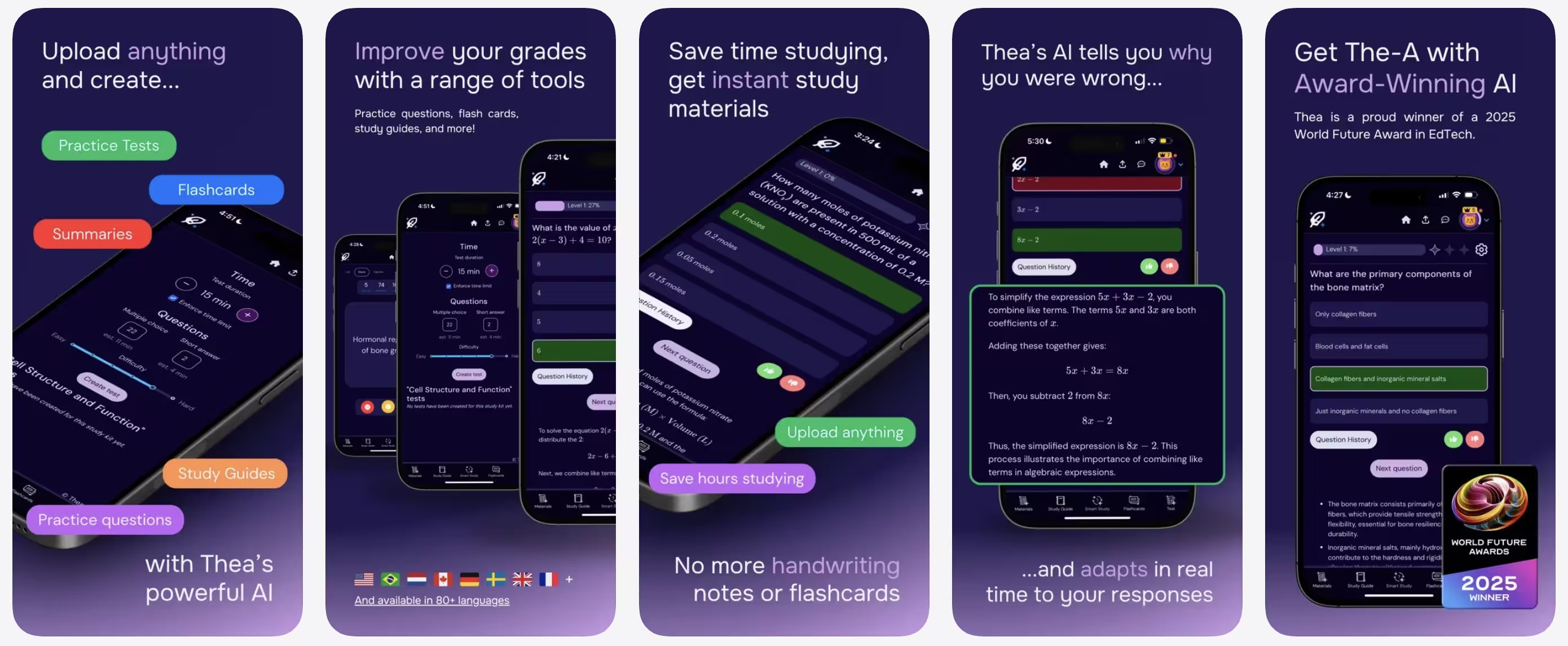
Thea was founded in 2023 by a high school junior named Baker who recognized there was no single tool that did everything students actually needed. In 2026, it's grown to over one million learners worldwide and recently launched v4.2 with new game modes, daily challenges, and scenario-based questions that go beyond simple memorization.
What makes Thea stand out:
- Smart Study uses active recall, spaced repetition, and self-quizzing to make you genuinely understand material.
- Upload anything: handwritten notes, PDFs, lecture videos, YouTube links, or simply describe your test.
- Adaptive difficulty: questions get harder as you master content and drill the exact weak spots holding your grade back.
- Interactive flashcards and games including brand new modes: Stacker, Definition Match, and Term Builder (v4.2).
- 80+ languages: one of the most accessible tools for international students.
What students are saying
At a glance
| Upload Types | PDFs, videos, images, YouTube, handwritten notes |
| Learning Methods | Active recall, spaced repetition, adaptive quizzing |
| Languages | 80+ |
| Price | Free |
The Verdict
Thea is the best free AI study app available right now. It combines research-backed learning methods with a genuinely clean interface and one of the most generous free tiers in the category. If you only try one free tool from this list, make it Thea.
NotesXP — The Best All-in-One AI Study Toolkit
My experience
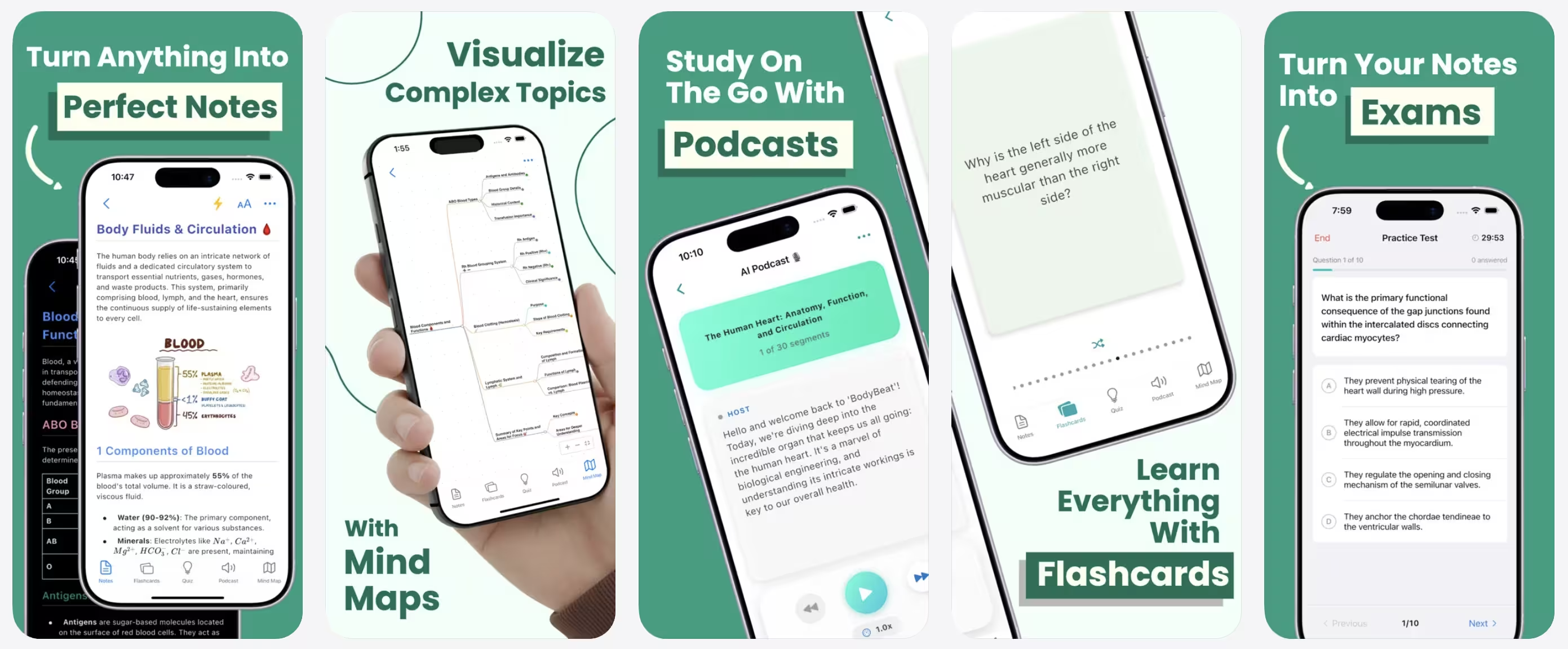
Two features really stood out as things no other app on this list does as well: AI-generated study podcasts and visual mind maps. The podcast feature turns any uploaded material into a conversational, bite-sized episode you can listen to on a walk or a commute, and it sounds like two real people talking, not a robotic text-to-speech reader. The mind maps render your topic as a visual web of connected concepts, which is the difference between memorizing a chapter and actually understanding how the ideas relate.
On top of that, NotesXP generates beautifully structured AI notes (with a navigable table of contents, still the only app that does this), smart flashcards, full exam-mode practice tests, and instant notes from a photo of any textbook page. It's the rare app where the breadth doesn't come at the cost of depth. Every feature feels considered.
My commute is 40 minutes each way. After discovering the podcast feature, I now arrive to every lecture having already reviewed the previous one as audio. On the days I sit down to study, the mind maps make complex topics click in a way flat notes never could. And those structured AI notes? I actually want to open them.
Read my full experience with NotesXP here.
What makes NotesXP stand out:
- AI-Generated Study Podcasts: convert any note, PDF, or lecture into a conversational two-host podcast episode. The #1 standout feature, perfect for commutes, walks, or any time you can't be at a desk. No other app on this list does this as well.
- Visual Mind Maps: automatically map complex topics as connected concept webs so you can see how everything relates spatially. The other signature feature that sets NotesXP apart.
- All-in-One Toolkit: notes, podcasts, mind maps, flashcards, exam mode, and AI chat in a single app. Replace your entire study app folder with one.
- AI Notes with Table of Contents: fully structured, beautifully formatted notes with a navigable table of contents. Still the only study app that builds this.
- Smart Flashcards: AI-crafted cards that focus on key facts and boost long-term memory.
- Exam Mode: create full practice tests from your notes and see exactly where you need to improve.
- Instant AI Notes: snap a photo of a textbook page or upload a PDF and get crisp, structured notes in seconds.
What students are saying
"I've downloaded so many apps trying to find 'the one', and I'm happy to say this is the one. It turns notes into flashcards, a podcast, a mind map and more!"
"Finally an app that does everything in one place. I deleted four other study apps after I got NotesXP."
At a glance
| Standout #1 | AI-generated study podcasts (best in class) |
| Standout #2 | Visual mind maps (no competitor matches this) |
| All-in-One | Notes, podcasts, mind maps, flashcards, exam mode |
| Only Con | iPhone/iPad/Mac only, no web or Android yet |
| Price | Free tier + paid plans |
The Verdict
NotesXP is the most complete AI study app I tested in 2026: a genuine all-in-one toolkit covering structured notes, study podcasts, mind maps, flashcards, and exam prep in a single app. The podcasts and mind maps are the standout features and remain unmatched by anything else on this list. The only real downside: NotesXP is currently available only on iPhone, iPad, and Mac, with no web or Android version yet, though both may be coming. If you're in the Apple ecosystem and want one app that does everything, this is the one to try.
StudyFetch — Best AI Tutor Experience
My experience
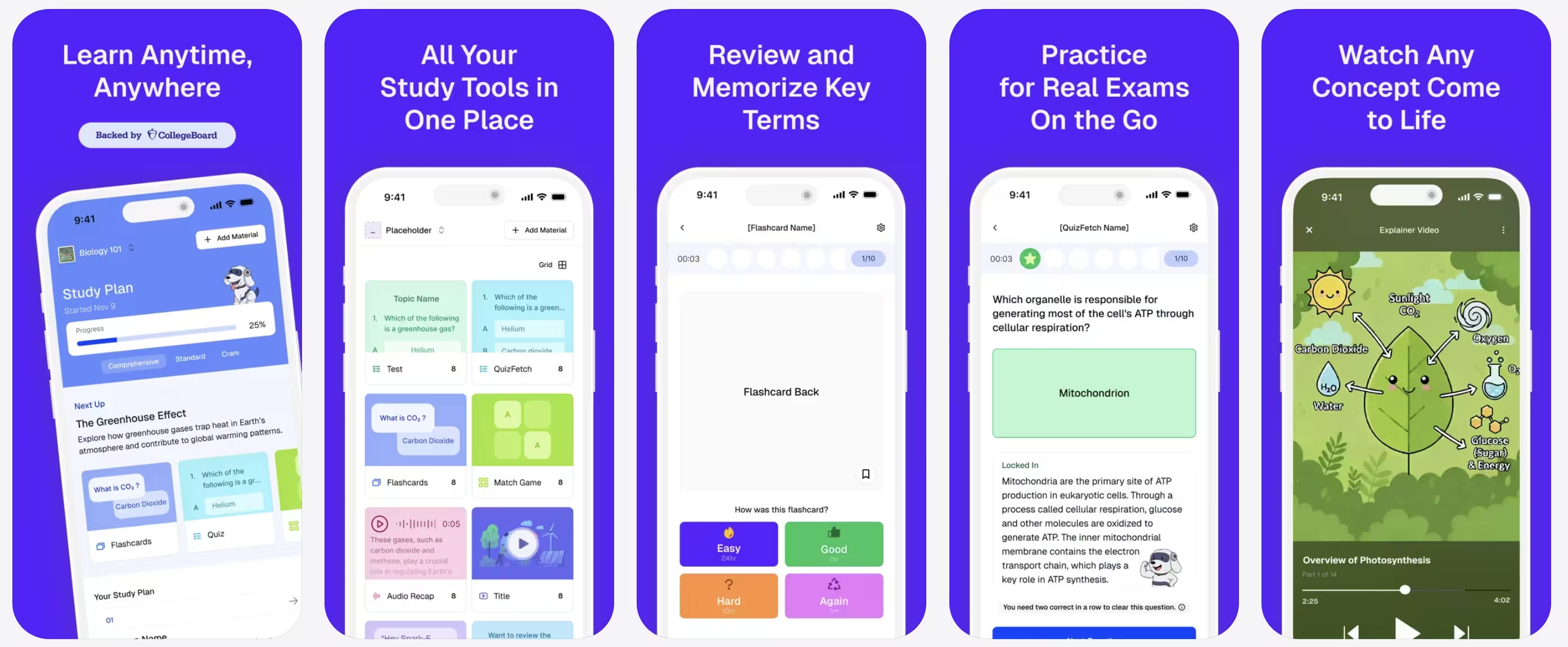
StudyFetch is built around a deceptively simple idea: upload your materials once, then have access to a personal tutor who knows them inside and out. Unlike asking generative AI a general question, Spark.E grounds every answer in your uploaded content. Your test will be on what your professor taught, not what Wikipedia says. That matters.
What makes StudyFetch stand out:
- Spark.E AI Tutor: answers questions based on your uploaded notes, not generic web knowledge; available 24/7 via chat or voice.
- Live Lecture Assistant (Premium): records live lectures in real time, so you can stay fully present in class while the AI takes notes.
- Tutor Me: voice-to-voice AI tutoring in beta, like a phone call with a study partner.
- Study Scheduler: builds a personalized study timeline based on your exam dates and the volume of material.
- Accepts everything: PDFs, PowerPoints, YouTube videos, audio recordings, handwritten notes, and integrates with Canvas.
What students are saying
At a glance
| AI Tutor | Spark.E, trained on your uploaded materials |
| Upload Types | PDFs, PPT, video, audio, handwriting |
| Live Lecture | Real-time note capture (Premium) |
| Price | Free limited; $7.99–$11.99/month |
The Verdict
StudyFetch is the closest thing to having a personal tutor who has actually read your syllabus. If you take content-heavy courses and want contextual AI help (not generic answers), this is your tool.
Note: The free tier is very limited. Budget around $8/month during the semester to get real value.
NotebookLM by Google — Best for Deep Research and Source-Grounded AI
My experience
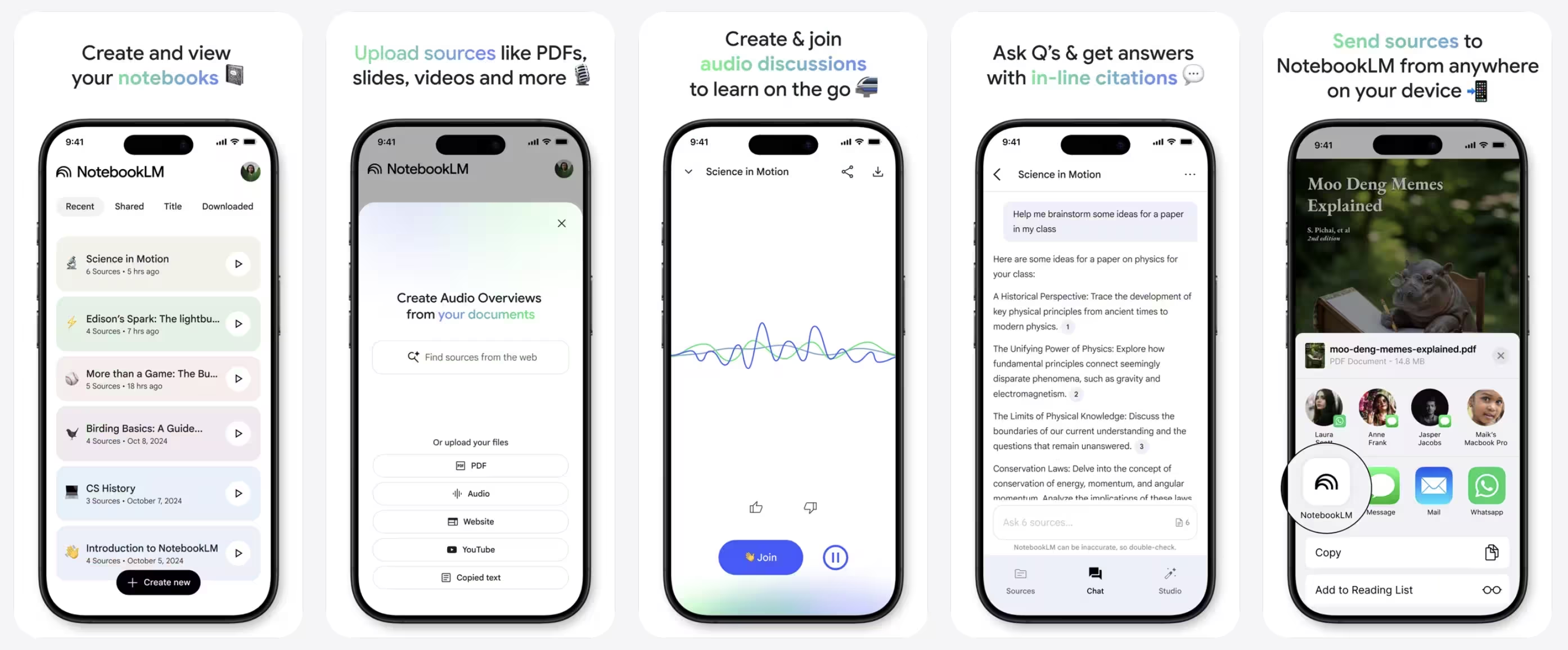
NotebookLM is Google's AI research assistant powered by Gemini. What makes it different from every other tool on this list is source-grounding: it only answers from the documents you upload, which dramatically reduces the AI hallucination problem.
What makes NotebookLM by Google stand out:
- Audio Overviews: convert dense documents into a realistic podcast-style conversation between two AI hosts.
- Interactive Mode: interrupt the AI podcast mid-conversation with your voice to ask questions; the hosts answer from your sources and pick back up.
- Synthesizes up to 50 source documents in a single notebook seamlessly.
- Privacy-first: your uploaded documents are not used to train Google's public models.
What students are saying
At a glance
| Upload Types | PDFs, Docs, YouTube, EPUB, audio, images |
| Standout Feature | Source-grounded AI podcast (Audio Overviews) |
| Privacy | Data not used to train Google's models |
| Price | Free (Google account required) |
The Verdict
NotebookLM is the best AI tool for students who are doing serious research or studying from large volumes of material. It's free, deeply private, and produces some of the highest-quality AI outputs available.
Knowt — Best Free Quizlet Alternative
My experience
Knowt is trusted by over 4 million students and positions itself as the definitive free Quizlet alternative. But calling it just a flashcard app undersells it. The AI flashcard automation genuinely saves hours of manual work.
What makes Knowt stand out:
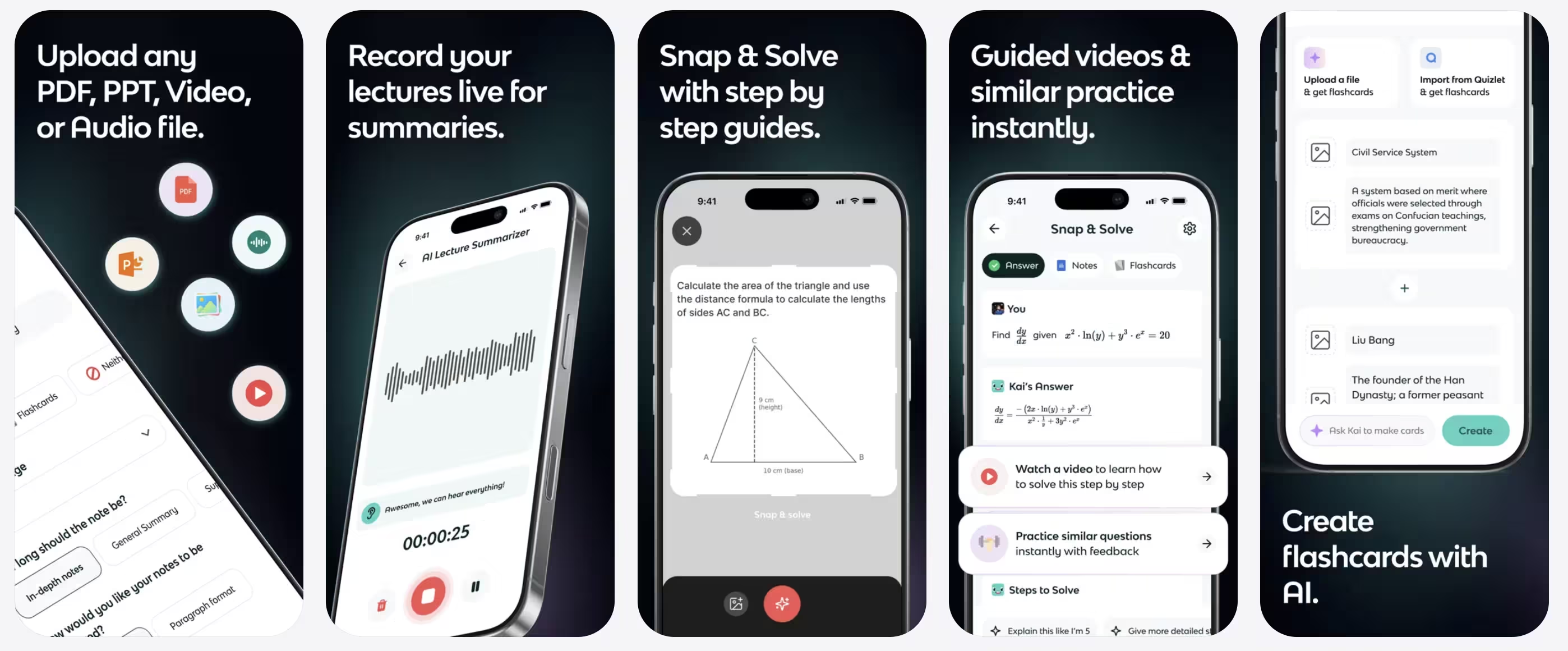
- AI Flashcard Generator: upload a PDF, paste notes, or drop a YouTube link, and get a complete flashcard set in seconds (~90% accuracy in testing).
- Free Learn Mode with Spaced Repetition: the feature Quizlet charges for; Knowt gives it away free.
- YouTube Lecture Summarizer: turns any lecture video into flashcards via the Chrome extension.
- One-click Quizlet Import: seamless migration for anyone switching platforms.
What students are saying
At a glance
| Free Tier | Extremely generous, includes spaced repetition |
| Quizlet Import | One-click, seamless migration |
| Standout | AI YouTube summarizer & flashcard maker |
| Price | Free; optional Supporter plan |
The Verdict
If you're paying for Quizlet or looking for a free alternative that actually works, Knowt is your answer. The AI flashcard generator and free spaced repetition make it the best budget study tool in 2026.
Quick Comparison: Which AI Study Tool Should You Use?
How the top 5 stack up in 2026
| Feature | Thea | NotesXP | StudyFetch | NotebookLM | Knowt |
|---|---|---|---|---|---|
| Flashcard Automation | |||||
| Audio/Podcast Generation | |||||
| Spaced Repetition Engine | |||||
| Video Processing | |||||
| AI Tutor Accuracy (Context) | |||||
| Value for Free Users |
What the Science Says About AI-Assisted Studying
These tools aren't just convenient. The learning methods they're built on are research-backed.
A 2026 meta-analysis in The Clinical Teacher analyzed over 21,000 learners and found that spaced repetition produced a large effect size (d = 0.78) for long-term retention. Active recall (being tested on material rather than passively re-reading it) is consistently ranked among the most effective study strategies in cognitive science research.
The best AI study tools in 2026 don't just digitize your notes. They force you to retrieve information, adapt to your weaknesses, and space out your review sessions: all the things that research shows actually work. The AI just removes the hours of setup that used to prevent students from doing this consistently. If you're short on time, check out our guide on studying effectively under pressure.
How to Actually Get the Most Out of AI Study Tools
- 1. Upload your actual course materials, not generic content.
The more specific your inputs, the better the outputs. Your professor's lecture slides will always beat a random textbook chapter. - 2. Don't just generate, actively use.
AI-generated flashcards are only useful if you actually drill them. The generation is fast; the learning still requires your effort. - 3. Combine tools for different purposes.
I use Thea for active recall during study sessions, NotebookLM for synthesizing research, and Knowt for commute-friendly flashcard review. They complement each other. - 4. Always verify AI-generated content in technical subjects.
Chemistry equations, medical terminology, and complex math can sometimes be subtly misrepresented. Cross-check anything high-stakes. - 5. Start early.
These tools work best over time. Spaced repetition needs space. Uploading your notes the night before an exam is better than nothing, but uploading them a week before is transformative.
Final Verdict
The best AI study tool in 2026 is the one you'll actually use consistently. Every app on this list has a clear strength. Here's how to pick:
- •Pick NotesXP if you want the most complete AI study app in one place: structured notes, study podcasts, mind maps, flashcards, and exam mode all in a single app (iPhone, iPad, and Mac)
- •Start with Thea if you want a powerful, free, all-in-one experience that works on web and Android
- •Add NotebookLM if your courses involve heavy reading or research
- •Switch to Knowt if flashcards are your primary study method
- •Invest in StudyFetch if you want a contextual AI tutor for your specific courses
Editor's pick for best AI app for studying overall: NotesXP
If we had to recommend one all-rounder, NotesXP is the AI study app we keep coming back to. It's the rare tool where notes, podcasts, mind maps, flashcards, and exam prep all live under one roof and each piece is genuinely strong. Worth checking out if you're on iPhone, iPad, or Mac.
The era of staring at a highlighter-covered textbook at 2 AM and hoping something sticks is over. These tools don't replace hard work, but they make the hard work dramatically more effective. Now go study smart. 📚